
The Collien Fernandes Case and the Real Name Requirement
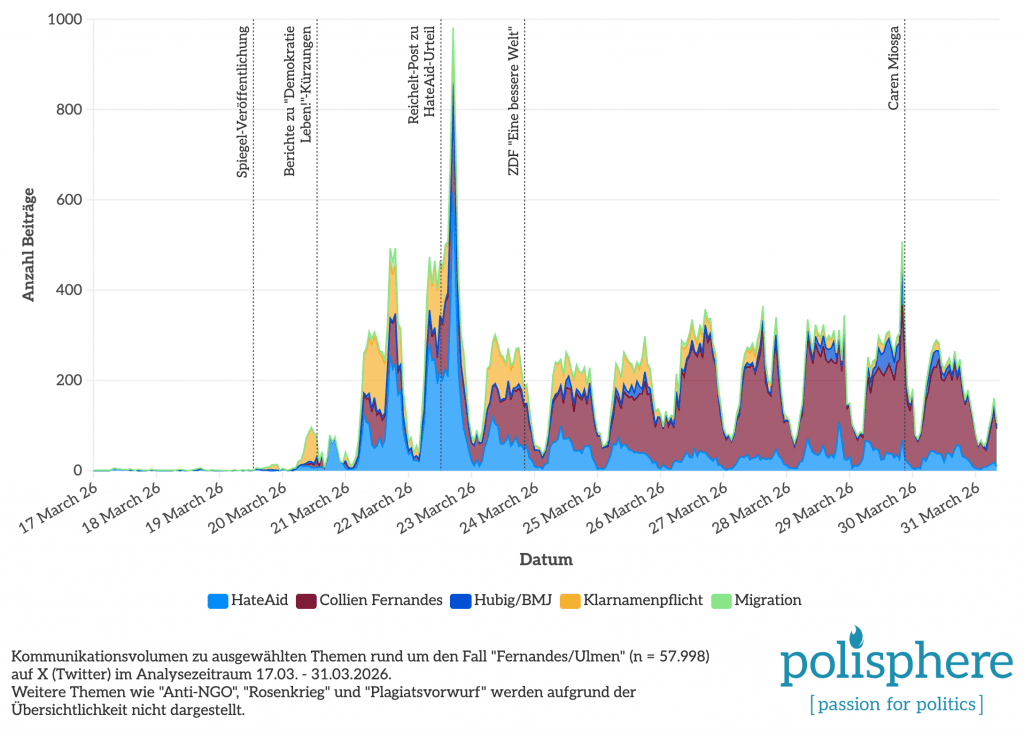
The Collien Fernandes case serves as a case study for the shift in New Right discourse across various levels and triggered by various events. We analyzed the X discourse surrounding this issue, which included over 57,998 posts in the last 12 days.
First the accusation of a campaign, then the victim
Most strikingly: Following the first SPIEGEL publication on March 19, allegations of a campaign for a so-called real-name requirement surfaced extremely quickly. This campaign was allegedly orchestrated by Collien Fernandes, HateAid, the Ministry of Justice, and, optionally, the public broadcasters. A key catalyst here was a tweet by Don Alphonso, in which he drew a connection to the case of Gina Lisa Lohfink and alleged interference in criminal proceedings. The long-planned ZDF broadcast of “Eine bessere Welt” (a feature film and documentary mentioning HateAid) on the evening of March 20 played right into this narrative. In the early stages, this campaign allegation—in connection with HateAid—was even more prominent than the debate over the allegations or Collien Fernandes herself.
HateAid and the Federal Ministry of Justice (BMJ) oppose the real-name requirement; Fernandes had called for an “identification requirement” just a few days before the publication.
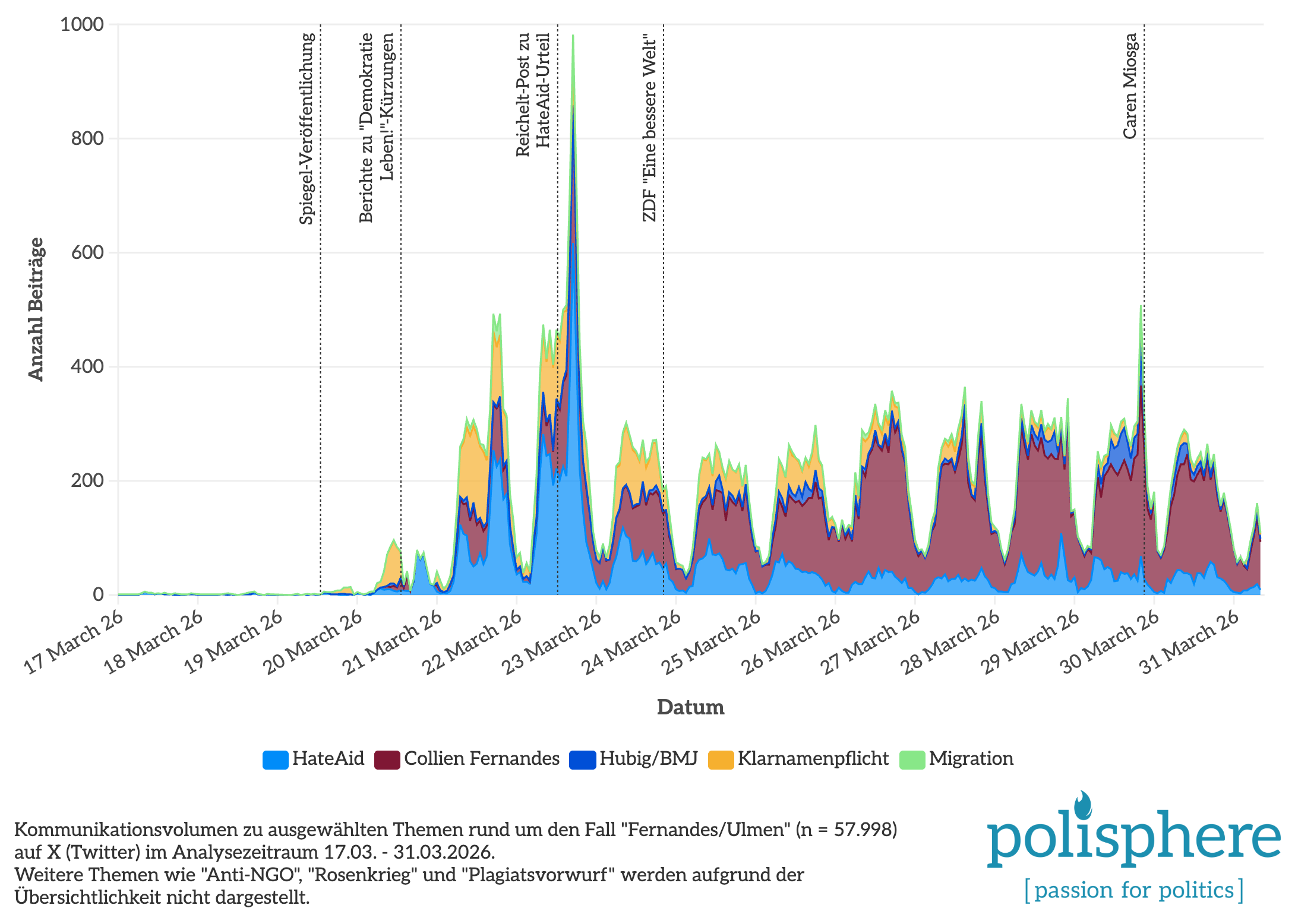
The events in the Fernandes/Ulmen case coincide with the cuts to the “Demokratie Leben!” program as well as the Hamburg Regional Court’s ruling on permissible descriptions of HateAid (“Green front organization” and “left-wing extremists”).
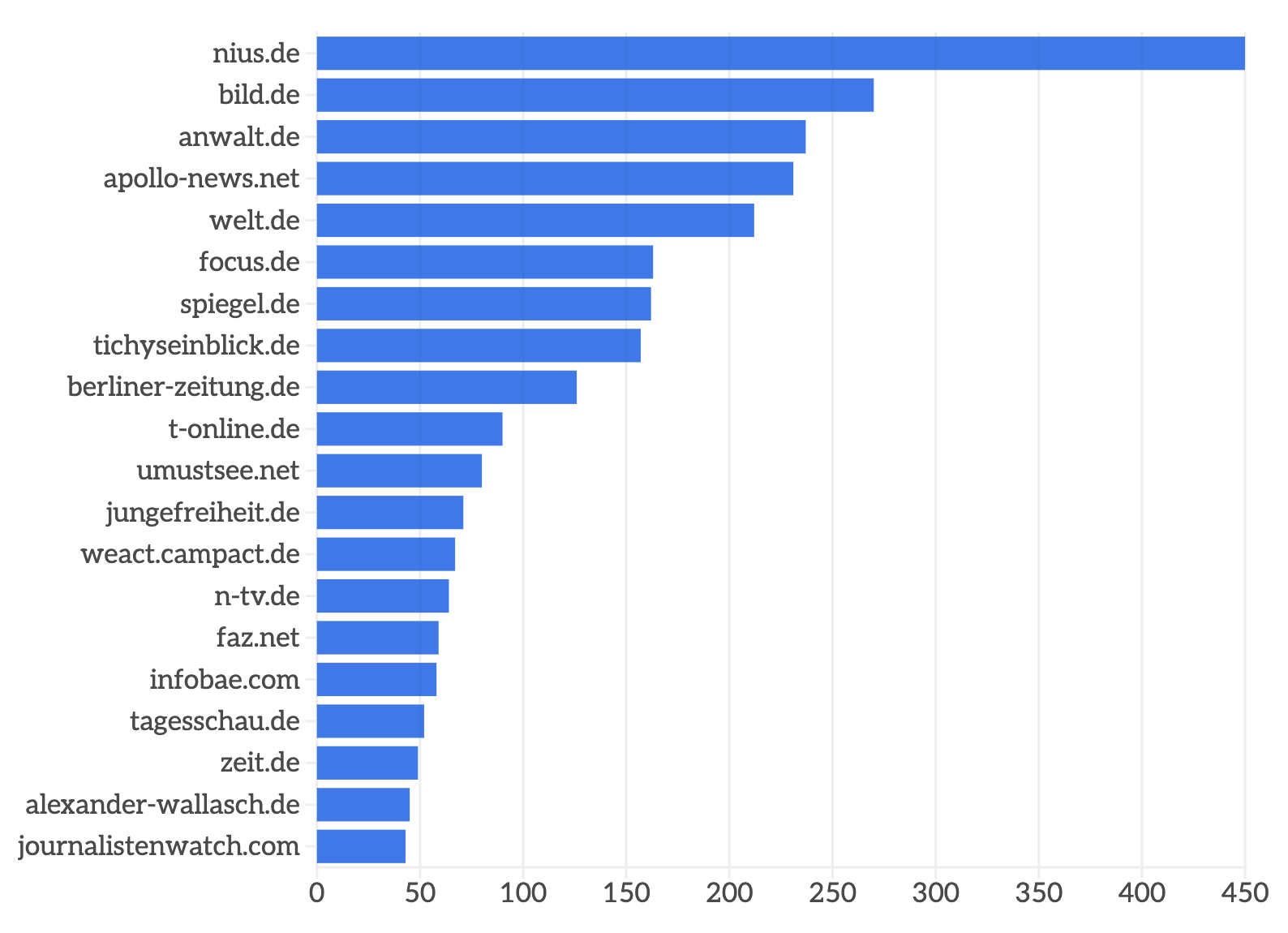
Over the entire period, the most frequent sources (excluding social media platforms) were:
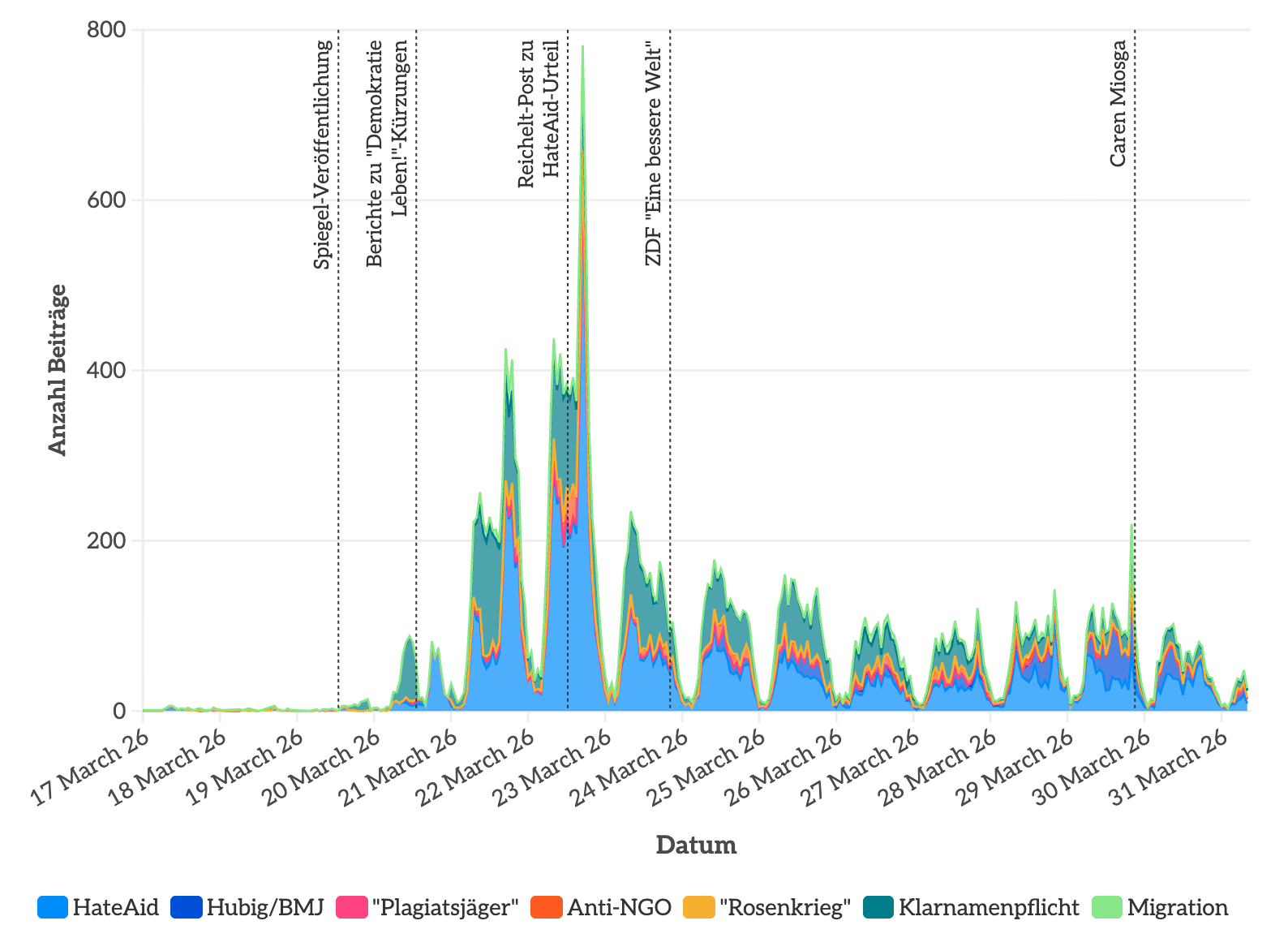
Main narratives:
- A rigged campaign to introduce the real-name requirement.
- Diversion to the topic of migration and gang rapes (“You look the other way when it comes to migrant violence” and “Better 20 digital rapes than one gang rape by refugees”).
- Trivialization as a “War of the Roses,” insinuations of misandry, a craving for recognition, attention-seeking, and, of course, outright lies.
- General anti-NGO narrative (“Correctiv 2.0” and the revival of the Potsdam conspiracy).
- As a sub-narrative: Following the funding cuts to “Demokratie Leben!”, other sources of funding must now be “campaigned for.”
- The “plagiarism hunter” Dr. Stefan Weber had already leveled accusations against HateAid even before the Fernandes case. These did not gain traction in the discourse.
- Generally, the narrative is embedded in well-known left-wing, green, and “woke” conspiracy patterns and “Deep State” narratives.
Additional sources of context on the topic include:
- Spiegel article
- Interview with HateAid Executive Director Josephine Ballon
- Caren Miosga talk show
- Ronzheimer podcast
This analysis does not constitute a substantive or legal assessment of the allegations but is a mixed-methods discourse analysis. In addition to the narratives mentioned, the analyzed posts also include neutral reporting, positive statements, and expressions of solidarity, albeit to a much lesser extent.
The analysis was conducted by Ralph Friedrich and Richard Schwenn. HateAid supported the analysis by providing data on an ad hoc basis and contributing to its funding.