
Fact-Check on the Impact of Ukrainian Drones Strikes on “Pro-AfD Bots”
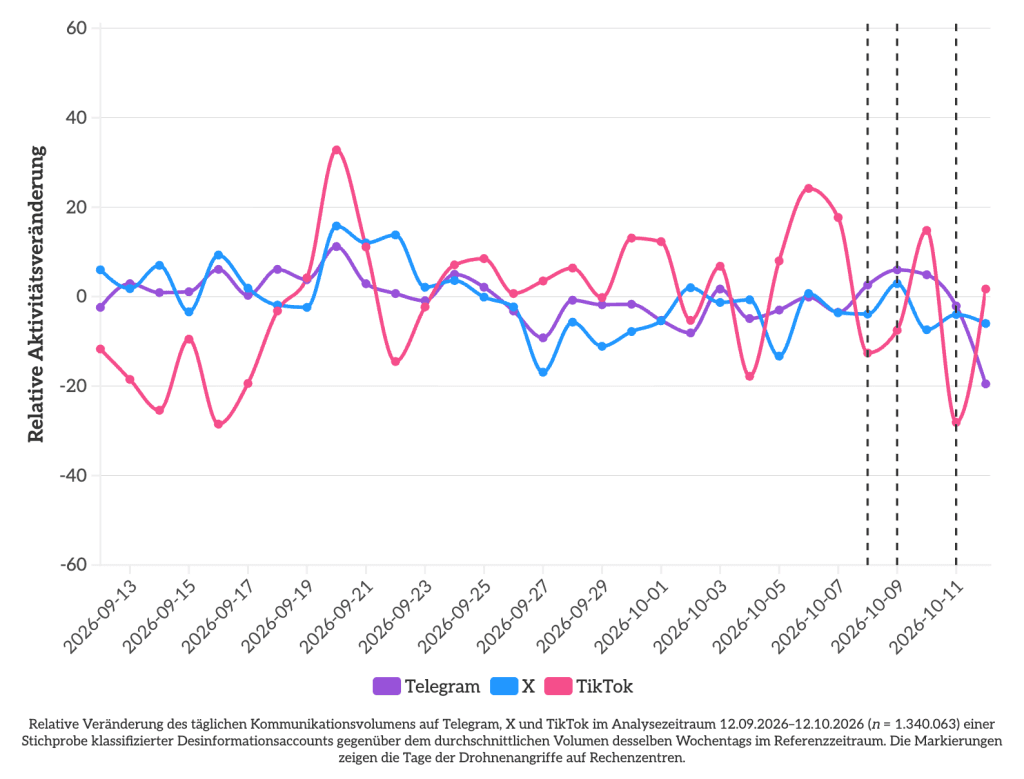
No, Ukrainian drones have not caused the AfD’s social media reach to plummet.
Following the attacks on Yandex, an infographic quickly began circulating about the alleged impact on “pro-AfD bots.” Richard Schwenn and Ralph Friedrich examined our polisphere monitoring data to see what the story was:
There were no statistically significant declines among relevant disinformation and pro-Russian actors (including clear-cut social bots) or among AfD-affiliated accounts on TikTok, Telegram, and X (see graphic: 1.3 million posts during the period under review).
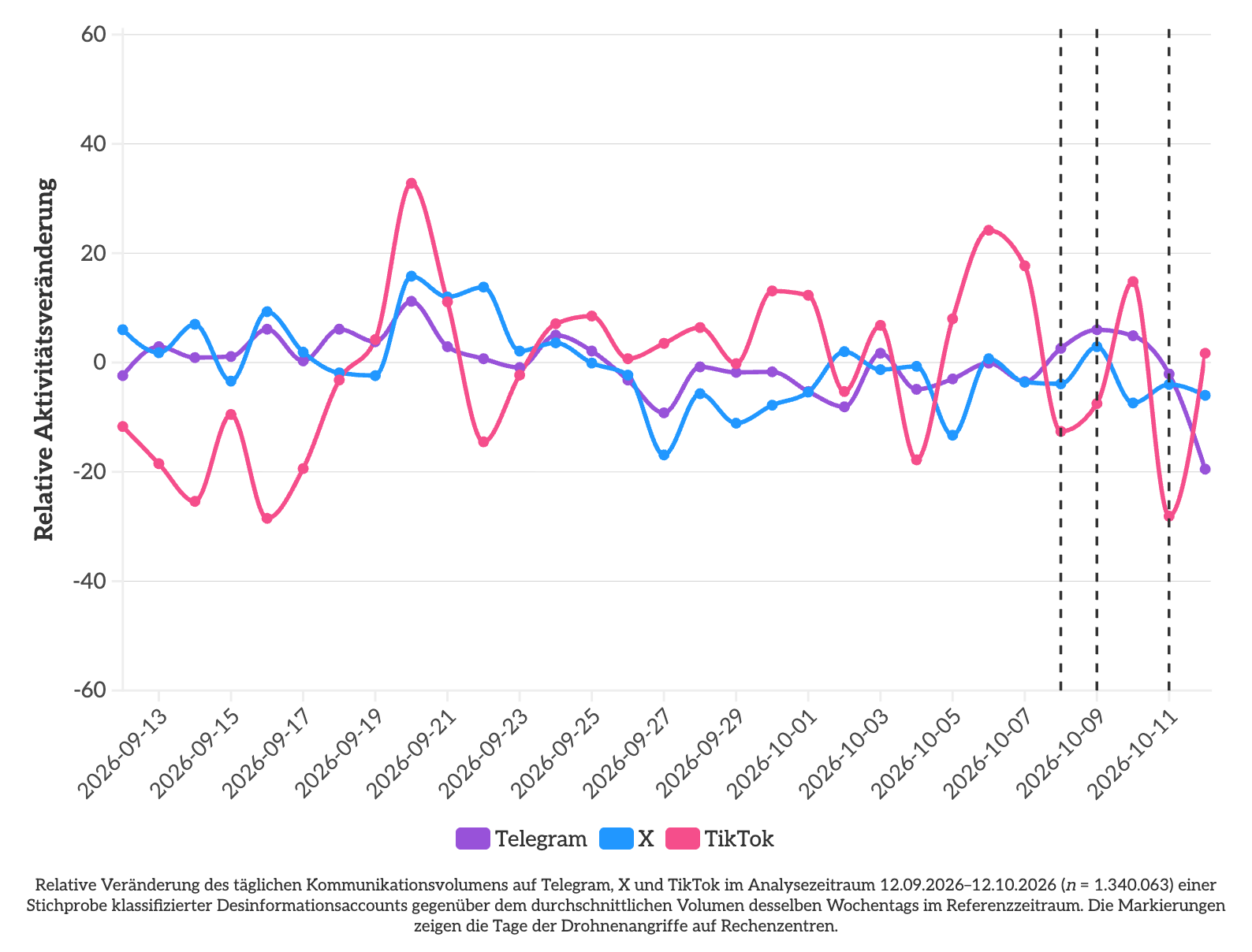
- Activity remains normal under posts from party and politician accounts across all political parties. This is precisely where such coordinated reach amplification often takes place. Data from the Potsdam Social Media Monitor also confirms this.
- There have been no major changes yet even in classic Kremlin campaigns such as “doppelgängers” and “matryoshka”: existing bots are no less active, and no fewer new ones are being created.
- Social bots rarely run through data centers with public IP addresses. Most often, smartphone farms and VPNs are behind them. The chart—often cited alongside this—showing Cloudflare data on outgoing bot traffic from data centers indicates that a search engine provider’s web crawlers go offline precisely when those same centers are attacked and shut down.
Why did the chart go so viral? Possibly a mix of confirmation bias regarding the significance of Russian bots, confusion over the technical details, and perhaps even deliberate agenda-setting.
So Yandex took a hit. The pro-AfD discourse in Germany did not.
Richard Schwenn, our Head of Data Analysis and AI, discusses the topic at Capital.
Click here for the SZ article on the incorrect AI graphic.